A gaming chair is more than just a seat; it’s a command center, a comfort zone, and often, a major investment. When accidents happen, whether it’s an unexpected spill or something far messier like vomit, the sight can be disheartening. But don’t despair. With over a decade of hands-on experience in the gaming chair industry, I understand the materials, the common mishaps, and the most effective methods to restore your beloved chair to its pristine condition. This guide will arm you with the knowledge and techniques to tackle even the most daunting cleanups, ensuring your gaming throne remains a hygienic and comfortable haven.
Understanding Your Gaming Chair’s Material
Before diving into cleaning, it’s paramount to identify your chair’s upholstery. Different materials react uniquely to cleaning agents, and using the wrong method can cause irreversible damage. Gaming chairs typically come in three main material types: PU/PVC leather, fabric, and mesh. Knowing which one you have is the first critical step toward a successful cleanup.
Cleaning PU and PVC Leather Gaming Chairs
|
Our Picks for the Best Gaming Chair in 2026
As an Amazon Associate I earn from qualifying purchases.
|
||
| Num | Product | Action |
|---|---|---|
| 1 | Ergonomic Office Chair with Footrest - Adjustable Lumbar Support & Headrest, 90-160° Reclining Mesh Back Computer Chair - Home Office/Gaming, 350lbs Capacity (SGS Certified) |

|
| 2 | GTPLAYER Gaming Chair,Office Chair with Pocket Spring Lumbar Support, Ergonomic Comfortable Wide Office Desk Computer Chair with Outward Fixed Soft Armrests and Footrest (PU Leather, Black) |
|
| 3 | BestOffice Gaming Chair Office Chair Ergonomic Desk Chair Racing Style Gaming Chair with Lumbar Support, Swivel Rolling Base, and Comfortable Padded Seat for Women and Men |
|
| 4 | Razer Iskur V2 X Ergonomic Gaming Chair: Built-in Lumbar Support - Widened Seat Base - High Density Foam Cushions - Adjustable 152 Degree Recline - 2D Armrests - Plush Fabric Finish - Black |
|
| 5 | TRALT Office Chair Ergonomic Desk Chair, 330 LBS Home Mesh Office Desk Chairs with Wheels, Comfortable Gaming Chair, High Back Office Chair for Long Hours (White) |
|
| 6 | Breathable Fabric Gaming Chair with Footrest, Height Adjustable Game Chair, Video Gaming Chair for Gaming Room, Living Room and Office - Blue/Light Grey |
|
| 7 | Gaming Chair with Linkage Armrest & Footrest, High Back Video Gaming Chair, Black/White |
|
| 8 | Gaming Chair, 400 lbs Adult Chair, High Back Computer Chair with Footrest and Linked Armrests, Office Video Game Chair with Lumbar Support (Grey) |
|
| 9 | BestOffice High-Back Gaming Chair PC Office Chair Computer Racing Chair PU Desk Task Chair Ergonomic Executive Swivel Rolling Chair with Lumbar Support for Back Pain Women, Men,White |
|
| 10 | Sweetcrispy Computer Gaming Desk Chair - Ergonomic PU Leather with Comfy Lumbar Support, Height Adjustable Rolling Desk with Flip-up Armrests, for Home and Office |
|
PU (polyurethane) and PVC (polyvinyl chloride) leathers are synthetic materials designed to mimic real leather. They are popular for their sleek appearance and generally easier maintenance compared to fabric. Their non-porous surface makes them somewhat resistant to quick absorption of liquids. However, they are susceptible to damage from harsh chemicals and excessive moisture. Prolonged exposure to sweat or strong cleaning solutions can cause these materials to crack, peel, or discolor over time. Always opt for gentle, pH-neutral cleaners and immediate drying to preserve their integrity.
Cleaning Fabric Gaming Chairs
Fabric gaming chairs offer breathability and a softer feel, but their woven nature makes them highly absorbent. This means spills and odors can penetrate deep into the fibers, leading to stubborn stains and lingering smells if not addressed promptly. Fabric chairs often require a more thorough cleaning approach that can reach embedded grime, sometimes necessitating specialized tools like wet vacuums or enzyme cleaners. Ventilation and complete drying are crucial to prevent mildew and musty odors.
Cleaning Mesh Gaming Chairs
Mesh chairs are renowned for their excellent airflow, keeping you cool during intense gaming sessions. While the open weave promotes ventilation, it also means that spills can seep through to the underlying padding or frame. Cleaning mesh requires a delicate touch to avoid stretching or damaging the material. Light, gentle wiping and spot cleaning are generally the best strategies, coupled with careful attention to drying.
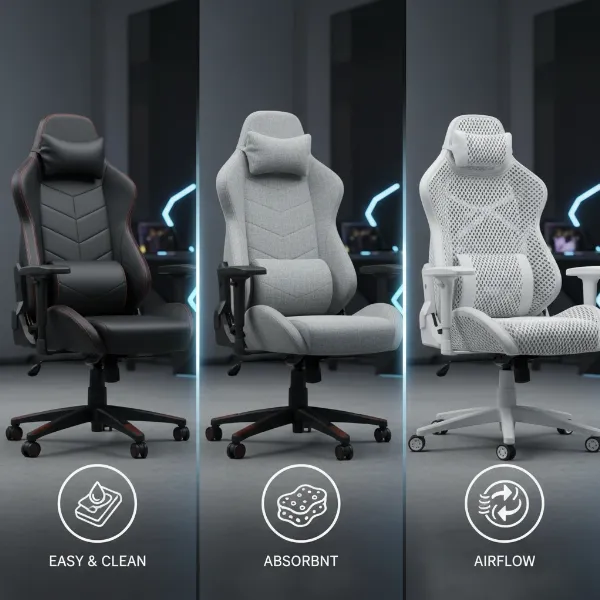 various gaming chair materials like pu leather fabric mesh cleaning guide
Act Fast: Immediate Steps for Vomit and Spill Cleanup
Time is your greatest ally when disaster strikes. The quicker you act, the higher your chances of preventing permanent stains and odors.
First, for solid matter like vomit, carefully scoop up as much of the material as possible using a spoon, spatula, or stiff piece of cardboard. Avoid pressing down or spreading the mess. Dispose of the solids in a sealed bag immediately.
For liquid spills, whether it’s a drink or the remaining liquid from vomit, blot the area gently with clean paper towels or a dry microfiber cloth. The key word here is “blot”—do not rub, as rubbing can push the liquid deeper into the fibers or spread it across the surface. Continue blotting until no more moisture transfers to your clean cloth or paper towel.
“Immediate action is the single most important factor in preventing lasting damage from spills. Every second counts when dealing with liquids or organic matter on your gaming chair.”
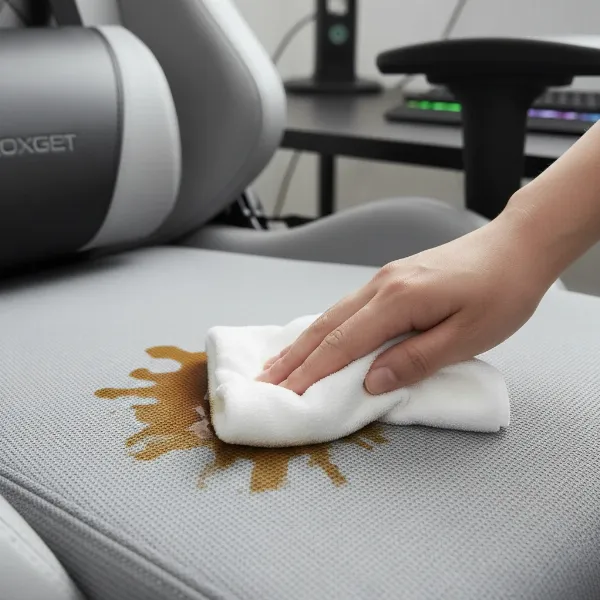 person gently blotting a liquid spill on a fabric gaming chair with a microfiber cloth
Essential Cleaning Arsenal: Supplies You’ll Need
Having the right tools at hand will make the cleaning process smoother and more effective. Here’s a checklist of common supplies:
- Microfiber cloths: Several clean, dry ones for blotting and wiping.
- Vacuum cleaner with upholstery attachment: Essential for removing loose debris and dried cleaning agents.
- Mild dish soap (pH-neutral): A small amount mixed with water works for most materials.
- Warm water: Preferably distilled for PU/PVC leather to prevent mineral buildup.
- Baking soda: A powerful natural deodorizer and absorbent.
- Enzymatic cleaner: Crucial for breaking down organic stains and odors (e.g., vomit, pet messes).
- Spray bottle: For applying diluted cleaning solutions evenly.
- Soft brush or sponge: For gentle scrubbing on fabric or mesh.
- Paper towels: For initial absorption of spills.
- Isopropyl alcohol (70%): For disinfection and ink stains (use with caution on PU/PVC leather).
- White vinegar: For general cleaning, deodorizing, and some dye transfer stains.
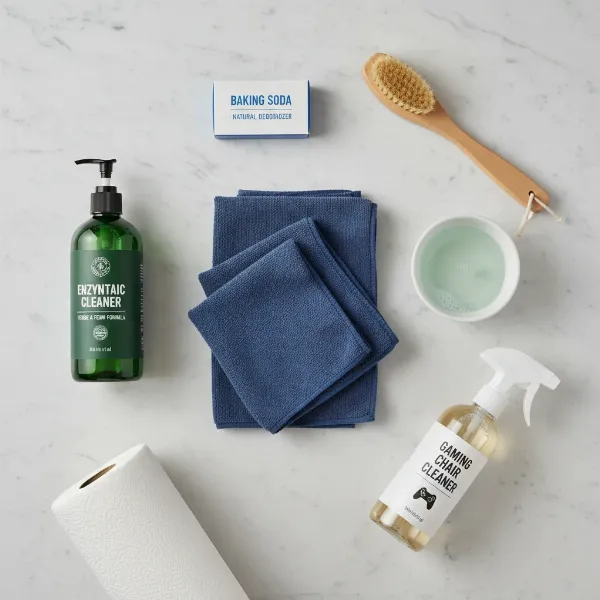 essential cleaning supplies for gaming chair maintenance and stain removal
The Vomit Vanguard: Step-by-Step Guide to Removing Vomit Stains and Odors
Vomit cleanup is a two-pronged attack: stain removal and odor elimination. Follow these steps for a comprehensive clean.
Initial Cleanup and Odor Neutralization
After removing all solids and blotting excess liquid, the area will likely still be damp and carry a strong odor.
- Generously sprinkle baking soda over the affected area. For fabric chairs, gently work it into the fibers with a soft brush. For PU/PVC leather, ensure even coverage without scrubbing.
- Let the baking soda sit for several hours, ideally overnight (or even a full day for severe odors). Baking soda is a natural absorbent that will draw out moisture and neutralize odors.
- Vacuum the baking soda thoroughly. Use your vacuum’s upholstery attachment to ensure all powder is removed.
- Apply an enzymatic cleaner. These cleaners are specifically designed to break down organic matter at a molecular level, effectively eliminating both the stain and the odor source. Follow the product instructions for application; usually, this involves saturating the area and letting it air dry. If your chair is fabric, ensure deep penetration. If it’s PU/PVC leather, spray onto a cloth and blot, rather than directly soaking the material.
Tackling Persistent Stains
If a stain remains after the initial baking soda and enzymatic treatment, it’s time for targeted spot cleaning.
- For Fabric Chairs: Mix a small amount of mild dish soap with warm water in a spray bottle. Lightly mist a clean microfiber cloth with the solution, then gently blot the stain. You can use a soft brush to gently scrub stubborn spots, but avoid harsh scrubbing that could damage fibers. Rinse by blotting with a damp cloth (water only) until all soap residue is gone.
- For PU/PVC Leather Chairs: Mix one teaspoon of pH-neutral soap with one cup of distilled warm water. Dampen a microfiber cloth (do not soak) and wipe the stained area in linear strokes. Immediately follow with a second, barely damp cloth rinsed with plain water to remove all soap, then dry with a third, dry cloth. For grease or oil stains from the vomit, sprinkle cornstarch or baking soda on the spot, let it sit for a few hours, then gently brush it off before wiping clean.
Disinfecting Your Gaming Chair
Vomit contains bacteria and pathogens, making disinfection a crucial step.
- Prepare a disinfectant solution. A 70% isopropyl alcohol solution is generally safe for most materials, though always spot-test first. For highly durable materials like some UltraFabrics, a 1:5 bleach-to-water solution might be an option, but this is generally too aggressive for typical gaming chair upholstery.
- Apply with care. Dampen a clean microfiber cloth with your chosen disinfectant. Never spray alcohol or bleach solutions directly onto the chair, as overspray can damage components or cause discoloration.
- Wipe down the affected areas, ensuring the surface remains visibly wet for at least 30 seconds to effectively kill germs. Pay extra attention to seams and crevices.
- Rinse thoroughly. After disinfection, immediately wipe the area with a clean cloth dampened with plain water to remove any residue. This is particularly important for PU/PVC leather to prevent drying out or damage.
Drying and Airing Out
Proper drying is essential to prevent mildew and lingering odors.
- Air dry naturally: Position your chair in a well-ventilated area, away from direct sunlight or heat sources. Open windows and use a fan to circulate air.
- Avoid direct heat: Do not use hairdryers or direct sun exposure, especially on PU/PVC leather, as this can cause materials to crack or fade.
- Ensure complete dryness: Allow ample time for the chair to dry completely before using it again. This might take several hours, or even a full day for fabric chairs.
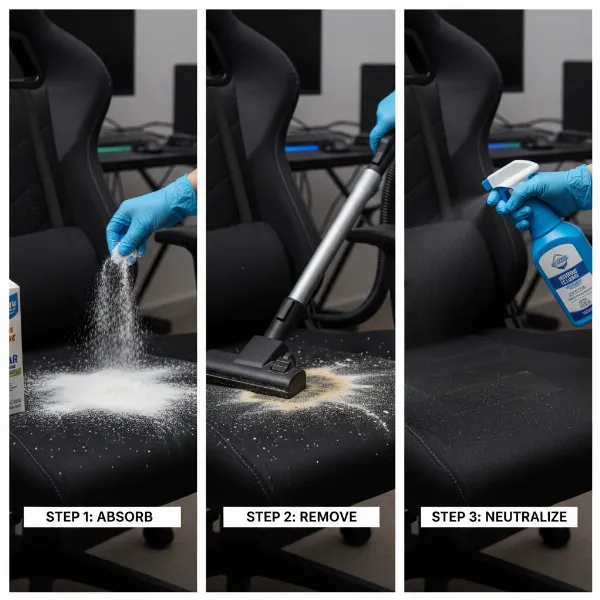 step-by-step cleaning of a fabric gaming chair after vomit incident
Conquering Common Liquid Spills (Coffee, Soda, Food)
While less severe than vomit, everyday spills still require prompt attention to avoid lasting stains.
- Blot, don’t rub: Immediately absorb as much of the liquid as possible with paper towels or a clean microfiber cloth.
- Diluted soap solution: For most non-greasy spills, a mild solution of dish soap and warm water is effective. Dampen a cloth with the solution and gently blot the stain.
- Rinse thoroughly: Use a separate cloth dampened with plain water to wipe away soap residue.
- Dry: Air dry in a well-ventilated area.
“For any spill, remember that less is more when it comes to cleaning solutions. Over-saturating your chair, especially with harsh chemicals, can do more harm than the spill itself.”
Prevention and Maintenance: Keeping Your Chair Pristine
An ounce of prevention is worth a pound of cure. Implement these habits to protect your gaming chair:
- Use protective covers: A towel or a dedicated seat cover can shield your chair during meals or intense, sweaty gaming sessions.
- Eat and drink mindfully: Try to avoid consuming messy foods or open drinks directly over your chair.
- Regular cleaning: Dust and vacuum your chair weekly to remove loose debris, skin flakes, and crumbs.
- Wipe down frequently: Use a slightly damp microfiber cloth to wipe down armrests and common contact points regularly to remove oils and light grime.
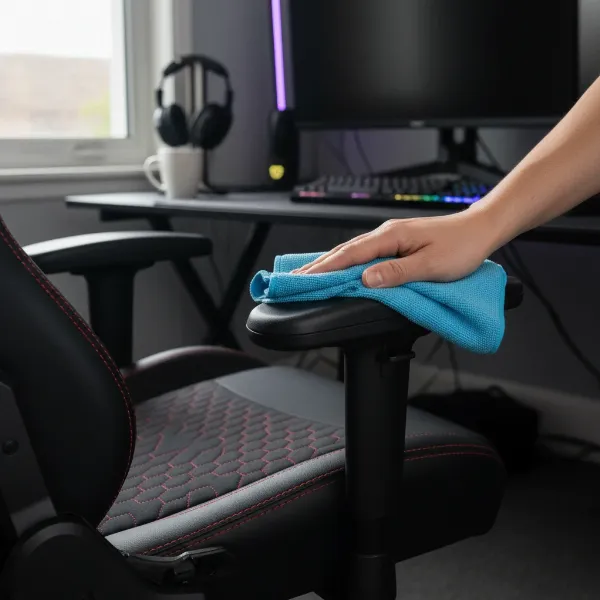 person wiping down gaming chair with microfiber cloth for routine upkeep
When Professional Help is a Must
Sometimes, despite your best efforts, a spill can be too severe, or an odor too pervasive. Knowing when to call in the professionals can save your chair from irreversible damage.
Consider professional cleaning if:
- The stain covers a large area or is deeply embedded.
- The odor persists even after multiple cleaning attempts.
- You are unsure about your chair’s material or how it reacts to cleaning agents.
- Your chair is made of genuine leather, which requires specialized cleaning and conditioning.
Professionals have industrial-grade equipment and specialized knowledge to handle complex cleaning challenges without damaging your chair.
Conclusion
Accidents are an inevitable part of life, but a spilled drink or an unfortunate incident of vomit doesn’t have to spell the end for your gaming chair. By understanding your chair’s material, acting swiftly, and employing the right cleaning techniques, you can effectively tackle stains and odors. Regular maintenance and preventative measures will further ensure your gaming chair remains a comfortable, clean, and inviting space for countless hours of immersive play and productive work. Don’t let a minor mishap disrupt your experience. What’s the most unusual spill you’ve ever had to clean from your Gaming Chair?
Frequently Asked Questions
Can I use a steam cleaner on my gaming chair?
Steam cleaners are generally safe for fabric chairs as they can penetrate and lift dirt effectively. However, avoid using them on PU or PVC leather chairs, as the high heat and moisture can damage the synthetic material, leading to peeling or cracking. Always test on an inconspicuous area first.
How do I remove a persistent vomit smell from a fabric gaming chair?
For stubborn vomit odors in fabric, repeat the baking soda treatment several times. Sprinkle a thick layer, let it sit for 24-48 hours, then vacuum. Additionally, saturate the area with a high-quality enzymatic cleaner and allow it to air dry completely, as these cleaners are designed to break down odor-causing organic compounds.
What should I avoid using to clean PU leather gaming chairs?
Absolutely avoid harsh chemicals like bleach, ammonia-based cleaners, or abrasive sponges (e.g., Magic Erasers) on PU leather. These can strip the protective coating, causing discoloration, cracking, and peeling. Also, do not over-saturate the material with water; always wipe with a damp cloth and dry immediately.
Is white vinegar safe for all gaming chair materials?
While a diluted white vinegar solution (1 part vinegar to 3 parts water) can be effective for cleaning and deodorizing fabric and mesh chairs, use it with caution on PU or PVC leather. Always perform a spot test in an hidden area first, and ensure you wipe away all residue promptly to prevent potential drying or damage to the synthetic surface.
How often should I deep clean my gaming chair?
The frequency of deep cleaning depends on usage. For daily users, a light vacuum and wipe-down weekly is recommended. A more thorough deep clean, addressing stains and odors, might be necessary every 3-6 months, or immediately after any significant spill or accident. Regular preventative cleaning reduces the need for frequent deep cleans.