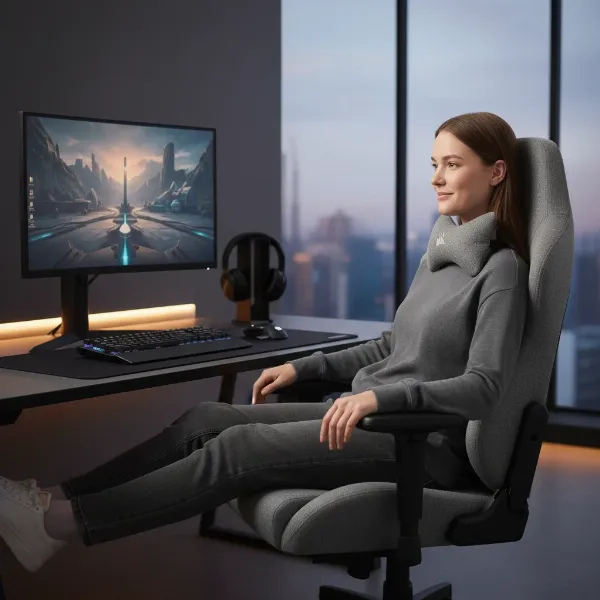
Spending hours immersed in virtual worlds or focused on demanding tasks requires more than just a powerful PC; it demands a comfortable and supportive environment. A high-quality gaming chair is a crucial investment, but its true potential for maximum comfort and ergonomic support is only unlocked through proper adjustment. Many gamers overlook the nuanced settings of their chairs, leading to preventable discomfort, fatigue, and even long-term health issues. Understanding how each lever, knob, and cushion works can transform your sitting experience, allowing you to game longer, work smarter, and feel better.
The Ergonomic Imperative: Why Adjusting Your Gaming Chair Matters
A gaming chair is designed to provide comprehensive support, but it’s not a “set it and forget it” piece of equipment. Proper adjustment is fundamental for your well-being and performance. Without it, even the most advanced chair can contribute to poor posture and physical strain.
Improved Posture and Spinal Health
|
Our Picks for the Best Gaming Chair in 2026
As an Amazon Associate I earn from qualifying purchases.
|
||
| Num | Product | Action |
|---|---|---|
| 1 | BestOffice Gaming Chair Office Chair Ergonomic Desk Chair Racing Style Gaming Chair with Lumbar Support, Swivel Rolling Base, and Comfortable Padded Seat for Women and Men |

|
| 2 | Gaming Chair with Linkage Armrest & Footrest, High Back Video Gaming Chair, Black/White |
|
| 3 | Razer Iskur V2 X Ergonomic Gaming Chair: Built-in Lumbar Support - Widened Seat Base - High Density Foam Cushions - Adjustable 152 Degree Recline - 2D Armrests - Plush Fabric Finish - Black |
|
| 4 | TRALT Office Chair Ergonomic Desk Chair, 330 LBS Home Mesh Office Desk Chairs with Wheels, Comfortable Gaming Chair, High Back Office Chair for Long Hours (White) |
|
| 5 | Breathable Fabric Gaming Chair with Footrest, Height Adjustable Game Chair, Video Gaming Chair for Gaming Room, Living Room and Office - Blue/Light Grey |
|
| 6 | Ergonomic Office Chair with Footrest - Adjustable Lumbar Support & Headrest, 90-160° Reclining Mesh Back Computer Chair - Home Office/Gaming, 350lbs Capacity (SGS Certified) |
|
| 7 | Sweetcrispy Computer Gaming Desk Chair - Ergonomic PU Leather with Comfy Lumbar Support, Height Adjustable Rolling Desk with Flip-up Armrests, for Home and Office |
|
| 8 | GTPLAYER Gaming Chair,Office Chair with Pocket Spring Lumbar Support, Ergonomic Comfortable Wide Office Desk Computer Chair with Outward Fixed Soft Armrests and Footrest (PU Leather, Black) |
|
| 9 | BestOffice High-Back Gaming Chair PC Office Chair Computer Racing Chair PU Desk Task Chair Ergonomic Executive Swivel Rolling Chair with Lumbar Support for Back Pain Women, Men,White |
|
| 10 | Gaming Chair, 400 lbs Adult Chair, High Back Computer Chair with Footrest and Linked Armrests, Office Video Game Chair with Lumbar Support (Grey) |
|
Correctly adjusting your gaming chair helps maintain the natural S-curve of your spine, preventing slouching and reducing pressure on your lower back. This optimal alignment is crucial for distributing weight evenly and minimizing strain on muscles, ligaments, and discs. Over time, consistent good posture can ward off chronic back pain, neck stiffness, and other musculoskeletal issues that plague long-term sitters.
Reduced Fatigue and Discomfort
When your chair is tailored to your body, it actively supports you, allowing your muscles to relax rather than work overtime to hold you upright. This significantly reduces fatigue in your back, neck, and shoulders, enabling you to remain comfortable and energized for extended periods. Reduced discomfort means you can focus on your game or work without distracting aches and pains.
Enhanced Performance and Focus
Physical discomfort is a major distraction. A properly adjusted chair minimizes these distractions, helping you stay in the zone. When you’re comfortable, your concentration levels improve, reaction times can sharpen, and overall gaming performance can see a noticeable boost. It’s about creating an environment where your body supports your mind, not hinders it.
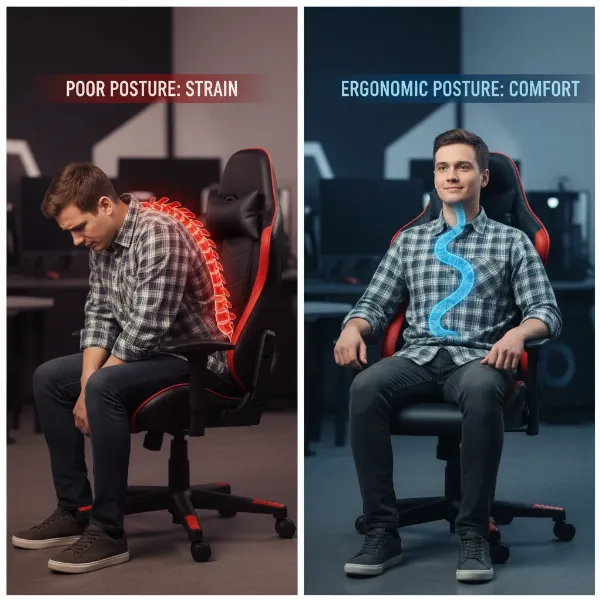 A split image showing the contrast between poor slouching posture and correct ergonomic posture in a gaming chair.
Decoding Your Gaming Chair’s Adjustable Features
Modern gaming chairs come equipped with a myriad of adjustment mechanisms, each serving a specific ergonomic purpose. Familiarizing yourself with these features is the first step toward personalized comfort.
Seat Height Mechanism
The gas lift mechanism allows you to raise or lower the entire seat. This is perhaps the most fundamental adjustment, dictating how your feet and legs interact with the floor and your desk. An incorrectly set seat height can lead to dangling feet, restricted blood flow, or knees positioned too high, which can flatten your lumbar curve.
Backrest Recline and Angle Lock
Most gaming chairs offer a deep recline function, allowing the backrest to tilt backward. A dedicated lever usually locks the backrest into various angles, from upright to nearly flat. This feature is vital for supporting different activities, from intense gaming sessions to relaxed media consumption, and for promoting subtle movement throughout the day.
Lumbar Support Systems
Lumbar support focuses on the natural inward curve of your lower back. Many chairs include adjustable lumbar pillows or built-in, adjustable mechanisms (like a dial or lever) that allow you to customize the depth and height of this support. Proper lumbar support fills the gap between your lower spine and the chair, preventing slouching.
Adjustable Armrests (2D, 3D, 4D)
Armrests come in various forms, often described by their “D” rating:
- 2D: Adjusts up and down.
- 3D: Adjusts up/down, forward/backward, and pivots inward/outward.
- 4D: Adds sideways movement to the 3D adjustments.
These adjustments are crucial for supporting your forearms and elbows, relieving pressure from your shoulders and wrists.
Headrest and Neck Support
Often a separate pillow or an integrated design, the headrest supports your head and neck. It’s particularly important when reclining, as it cradles the curve of your cervical spine. The height and angle of the headrest can often be adjusted to suit individual preferences.
Tilt Tension and Rocking Mechanism
This control determines how easily the chair’s seat and backrest (or just the seat) recline together. A tension knob allows you to stiffen or loosen the rocking motion. Some chairs also feature a tilt lock to fix the chair in a tilted position, offering flexibility for dynamic sitting or locking in a preferred recline.
Seat Depth Slider (If Applicable)
Some premium gaming chairs include a seat depth slider, allowing you to move the seat pan forward or backward. This adjustment ensures adequate thigh support while leaving enough space behind your knees for proper circulation, preventing pressure points.
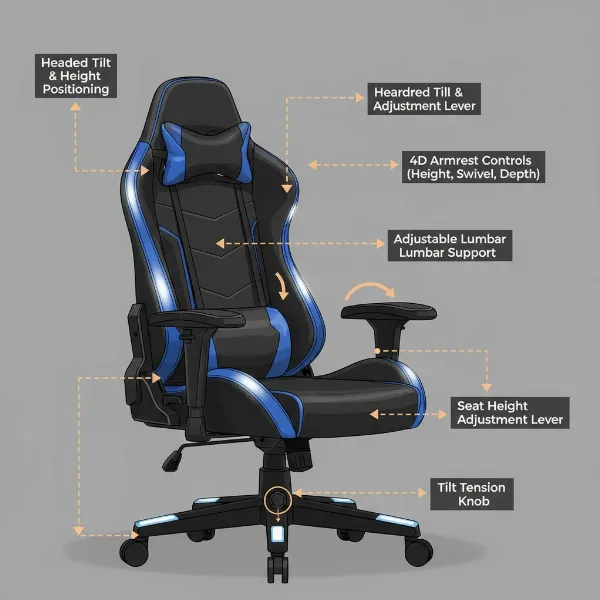 A detailed graphic of a gaming chair highlighting its various adjustment points with clear labels and arrows.
Step-by-Step Guide: Mastering Your Gaming Chair Adjustments
Achieving maximum comfort is a process of fine-tuning. Follow these steps to ergonomically adjust your gaming chair.
Achieving Optimal Seat Height and Leg Position
Your feet should be flat on the floor, or comfortably resting on a footrest if needed. Adjust the seat height so that your knees form an angle of approximately 90 to 100 degrees. Your thighs should be roughly parallel to the floor, or slightly angled down, with your hips level with or slightly higher than your knees. This configuration promotes healthy blood flow and reduces pressure on your lower back. To find the ideal height, stand in front of your chair and adjust the seat until the highest point of the cushion is just below your kneecaps, then sit down and refine.
Dialing In Your Seat Depth for Thigh Comfort
If your chair has a seat depth adjustment, slide the seat pan forward or backward. The goal is to leave a small gap of about 2-4 fingers (approximately 2-3 inches) between the front edge of the seat and the back of your knees. This ensures that your thighs are fully supported without the edge of the seat digging into the backs of your calves, which can restrict circulation and cause numbness.
Setting the Perfect Backrest Angle for Spinal Support
For active gaming or working, set your backrest to an angle between 100 and 110 degrees. This is a slight recline from a fully upright 90-degree angle, which allows for dynamic movement and reduces spinal compression while still providing excellent support. Ensure your entire back, from your shoulders down to your lower spine, is in full contact with the backrest. Avoid a completely upright, rigid posture as it can be less natural for your spine.
Customizing Lumbar Support for Lower Back Health
Position the lumbar support cushion or integrated mechanism so it fits snugly into the natural inward curve of your lower back, typically just above your beltline. It should provide gentle, supportive pressure that helps maintain this curve without pushing your back too aggressively forward. The aim is to fill the gap between your lower spine and the chair, preventing your back from rounding or slouching.
Positioning Armrests to Relieve Shoulder and Wrist Strain
Adjust your armrests so that your elbows form an approximate 90-degree angle when your forearms are resting on them, parallel to your desk. Your shoulders should feel relaxed, not shrugged or hunched. If your armrests are too high, your shoulders will lift; if too low, you’ll lean or strain. Utilize all dimensions of adjustment (height, depth, width, pivot) to find the perfect position that supports your forearms and keeps your wrists in a neutral position while using your mouse and keyboard.
Utilizing the Headrest for Neck Alignment
The headrest, whether a separate pillow or integrated, should support the natural curve of your neck and cradle the base of your skull. It should not push your head forward. Adjust its height and angle so that it provides comfortable support, especially when you lean back or recline. When sitting upright, you might not constantly engage with the headrest, and that’s perfectly fine; its primary role is to provide support when needed and during moments of relaxation.
Fine-Tuning Tilt Tension for Dynamic Sitting
Adjust the tilt tension knob (usually found under the seat) to your body weight and preference. When properly set, you should be able to recline and rock back smoothly with minimal effort, without feeling like you’re falling backward or straining to lean back. A balanced tilt tension encourages healthy movement and changes in posture throughout your session, reducing the risks associated with static sitting. If your chair has a tilt lock, use it to secure your preferred recline angle for focused tasks.
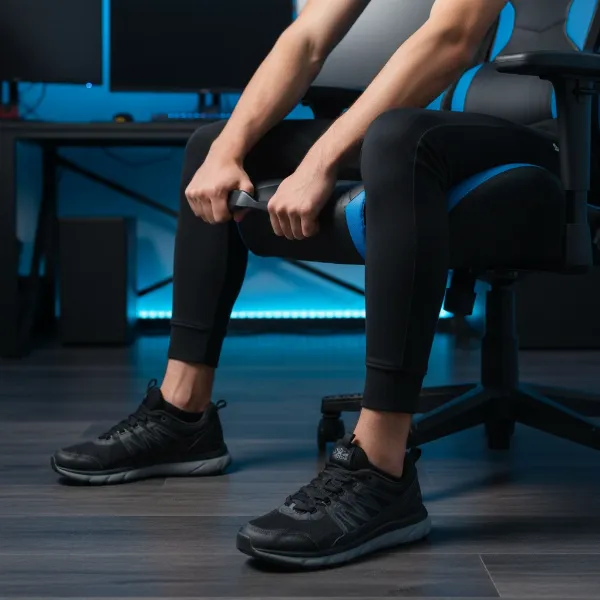 A person precisely adjusting the seat height of a gaming chair, ensuring their feet are flat on the floor and knees are at a 90-degree angle.
Integrating Your Gaming Chair with Your Setup
Optimizing your gaming chair is just one part of the ergonomic puzzle. Your desk and monitor setup also play crucial roles in your overall comfort and posture.
Desk Height Synchronization
Your desk height should ideally complement your chair’s adjustments. When your chair is set correctly with your feet flat and elbows at 90 degrees, your desk surface should be at a height that allows your forearms to rest comfortably on it, keeping your shoulders relaxed. If your desk is not height-adjustable, you may need to find a balance between chair height and using a keyboard tray to achieve proper wrist and arm alignment.
Monitor Placement for Eye Level Comfort
Position your monitor directly in front of you, about an arm’s length away. The top edge of the screen should be at or slightly below eye level. This prevents neck strain from looking up or down excessively. If you use multiple monitors, arrange them ergonomically to minimize head turning. Proper monitor placement ensures that your head remains in a neutral, relaxed position.
Importance of Regular Breaks and Micro-Adjustments
Even with the most perfectly adjusted chair, prolonged static sitting is not ideal. Make it a habit to take short breaks every 30-60 minutes. Stand up, stretch, and move around to promote circulation and reduce muscle stiffness. Throughout your session, don’t be afraid to make minor micro-adjustments to your chair settings. Slight changes in recline, lumbar support, or armrest position can provide relief and help you maintain comfort.
“A gaming chair isn’t a magic bullet; it’s a tool. Learning to use that tool effectively through proper adjustment is what truly unlocks its potential for health and performance.” – Dr. Emily R. Chen, Ergonomics Specialist
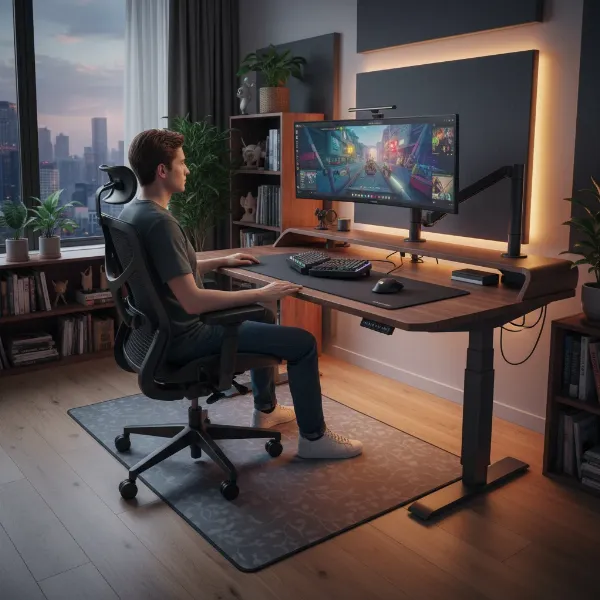 A complete ergonomic gaming setup with a properly adjusted gaming chair, desk, and monitor, demonstrating optimal user posture.
Troubleshooting Common Discomforts
Even after initial adjustments, you might experience some discomfort. This often indicates a need for further fine-tuning or addressing other aspects of your setup.
Persistent Back Pain
If you still experience back pain, revisit your lumbar support and backrest recline. Ensure the lumbar cushion is precisely positioned in the curve of your lower back, providing gentle but firm support. Experiment with slight changes to the recline angle (between 100-110 degrees) to find what feels most natural for your spine. Also, verify your feet are fully supported, as dangling feet can indirectly strain your lower back.
Neck and Shoulder Strain
Neck and shoulder pain usually stem from incorrect armrest height or monitor placement. Adjust your armrests so your shoulders are completely relaxed, and your elbows are at a 90-degree angle. Check that your monitor’s top edge is at or slightly below eye level, preventing you from craning your neck up or down. A properly adjusted headrest, cradling the base of your skull, can also alleviate neck strain, particularly when leaning back.
Leg Numbness or Soreness
Numbness or soreness in your legs often points to issues with seat height or depth. Ensure the 2-4 finger gap between the seat edge and the back of your knees to prevent circulation cutoff. If your feet are dangling, even slightly, adjust the seat height down or use a footrest. Your thighs should be fully supported by the seat, but without excessive pressure under the knees.
Conclusion
Mastering how to adjust your gaming chair is an essential skill for anyone who spends significant time at a desk. By taking the time to fine-tune each component—from seat height and depth to backrest recline, lumbar support, armrests, and headrest—you create a personalized ergonomic sanctuary. This isn’t just about fleeting comfort; it’s about investing in your long-term health, preventing strain, and enhancing your performance in every session. Remember, the perfect adjustment is unique to your body, so don’t hesitate to experiment and make micro-adjustments until your chair feels like a natural extension of yourself. Are you ready to unlock the full potential of your gaming chair and experience true comfort?
 A gamer doing light stretches after a long gaming session in a comfortable, relaxed setting, emphasizing self-care and ergonomic practices.
Frequently Asked Questions
How often should I readjust my gaming chair settings?
While major adjustments are made during initial setup, it’s beneficial to make minor tweaks or “micro-adjustments” throughout your day. Your body subtly shifts, and changing your posture slightly, along with small re-adjustments to the recline or lumbar support, can help maintain comfort and reduce static stress.
What’s the ideal backrest angle for gaming?
The ideal backrest angle for active gaming is generally between 100 and 110 degrees. This provides ample support for your spine while allowing a slight recline that reduces pressure compared to a rigid 90-degree upright posture. For relaxed viewing or breaks, you can recline further.
My feet don’t touch the floor, even at the lowest setting. What should I do?
If your feet don’t comfortably rest flat on the floor, consider using an ergonomic footrest. This will ensure your feet are supported, maintaining the crucial 90-degree knee angle and preventing pressure points under your thighs, which can restrict blood flow and lead to discomfort.
How tight should the lumbar support feel?
Lumbar support should feel supportive and snug, gently filling the natural curve of your lower back, but not forceful or painful. It should aid in maintaining your spine’s natural curve without pushing your back excessively forward. If it feels too aggressive, reduce its depth or adjust its position.
Can a gaming chair help with existing back pain?
Yes, a properly adjusted Gaming Chair can significantly alleviate existing back pain by promoting correct posture, providing targeted support to the lumbar region, and reducing overall spinal strain. However, it’s crucial to adjust it to your body and consult a healthcare professional for persistent or severe pain.
What are “4D” armrests and why do they matter?
4D armrests offer multi-directional adjustments: up/down, forward/backward, inward/outward pivot, and side-to-side movement. This extensive range allows for precise positioning of your forearms and elbows, crucial for relieving pressure on your shoulders, wrists, and preventing issues like carpal tunnel syndrome, especially during long gaming sessions.
Should my headrest constantly support my head?
Not necessarily. The headrest’s primary function is to support the natural curve of your neck and head, especially when reclining or taking a short break. When sitting actively upright, your head might not constantly be in contact with it, and that is generally considered normal and healthy.