Is your beloved armchair becoming a victim of your feline friend’s sharp claws? Few things are as frustrating for cat owners as watching their cherished furniture slowly unravel, thread by thread. While destructive scratching can feel like a personal attack on your home decor, it’s a deeply ingrained natural behavior for cats, not an act of defiance. Understanding why your cat scratches and implementing effective, humane strategies can transform your home and save your favorite chair.
This comprehensive guide will delve into the root causes of feline scratching and equip you with practical, tried-and-true methods to redirect this instinctual behavior towards appropriate outlets, ensuring both your cat’s well-being and your furniture’s longevity.
Understanding Why Cats Scratch
To effectively address scratching, it’s crucial to understand why cats do it. Scratching isn’t just about sharpening claws; it serves several vital functions for your cat’s physical and mental health. When you see your cat digging their claws into your chair, they’re not trying to be naughty; they’re simply expressing a natural need.
First and foremost, cats scratch to maintain their claws. This action helps remove old, frayed outer layers of their nails, revealing newer, sharper ones underneath. It’s a natural manicure essential for their paw health. Beyond grooming, scratching is a fantastic full-body stretch, allowing them to extend their muscles from nose to tail, similar to a human stretching after a long sit.
Secondly, scratching is a significant form of territorial marking. Cats have scent glands between their paw pads. When they scratch, they deposit a unique scent onto the surface, alongside visible scratch marks and discarded claw husks. This combination leaves a clear message for other felines in the area, communicating information about their presence and ownership. Your chair, unfortunately, becomes a prime canvas for this communication.
Finally, scratching can be an emotional outlet. Cats may scratch to express excitement, relieve stress or anxiety, or even out of boredom. For indoor cats, who lack access to trees and natural rough surfaces, your furniture often becomes the most appealing substitute. Sometimes, a cat might even scratch for attention, having learned that this behavior elicits a response from their human companions. Understanding these motivations helps us approach the problem with patience and empathy, focusing on redirection rather than punishment.
Creating an Irresistible Scratching Haven
The most effective way to protect your chairs is to provide alternatives that are even more appealing than your furniture. Think of it as giving your cat an upgrade, a dedicated “spa” for their paws.
Choosing the Right Scratching Post
Not all scratching posts are created equal, and cats can be particular about their preferences. Offering a variety is key to finding what your feline friend loves. Consider different materials:
- Sisal rope: This coarse, durable material mimics tree bark, a natural favorite for cats.
- Corrugated cardboard: Often found in horizontal scratch pads, it offers a satisfying shredding experience.
- Carpet: While some cats enjoy it, be cautious if your cat already scratches carpeted furniture, as it might reinforce undesirable habits.
- Wood or upholstery: Some posts feature these textures, catering to diverse preferences.
|
Our Picks for the Best Gaming Chair in 2026
As an Amazon Associate I earn from qualifying purchases.
|
||
| Num | Product | Action |
|---|---|---|
| 1 | Razer Iskur V2 X Ergonomic Gaming Chair: Built-in Lumbar Support - Widened Seat Base - High Density Foam Cushions - Adjustable 152 Degree Recline - 2D Armrests - Plush Fabric Finish - Black |

|
| 2 | Ergonomic Office Chair with Footrest - Adjustable Lumbar Support & Headrest, 90-160° Reclining Mesh Back Computer Chair - Home Office/Gaming, 350lbs Capacity (SGS Certified) |
|
| 3 | BestOffice Gaming Chair Office Chair Ergonomic Desk Chair Racing Style Gaming Chair with Lumbar Support, Swivel Rolling Base, and Comfortable Padded Seat for Women and Men |
|
| 4 | GTPLAYER Gaming Chair,Office Chair with Pocket Spring Lumbar Support, Ergonomic Comfortable Wide Office Desk Computer Chair with Outward Fixed Soft Armrests and Footrest (PU Leather, Black) |
|
| 5 | Sweetcrispy Computer Gaming Desk Chair - Ergonomic PU Leather with Comfy Lumbar Support, Height Adjustable Rolling Desk with Flip-up Armrests, for Home and Office |
|
| 6 | Gaming Chair, 400 lbs Adult Chair, High Back Computer Chair with Footrest and Linked Armrests, Office Video Game Chair with Lumbar Support (Grey) |
|
| 7 | Gaming Chair with Linkage Armrest & Footrest, High Back Video Gaming Chair, Black/White |
|
| 8 | TRALT Office Chair Ergonomic Desk Chair, 330 LBS Home Mesh Office Desk Chairs with Wheels, Comfortable Gaming Chair, High Back Office Chair for Long Hours (White) |
|
| 9 | BestOffice High-Back Gaming Chair PC Office Chair Computer Racing Chair PU Desk Task Chair Ergonomic Executive Swivel Rolling Chair with Lumbar Support for Back Pain Women, Men,White |
|
| 10 | Breathable Fabric Gaming Chair with Footrest, Height Adjustable Game Chair, Video Gaming Chair for Gaming Room, Living Room and Office - Blue/Light Grey |
|
Beyond material, consider the orientation. Some cats prefer to stretch upwards, needing a vertical post that is tall and sturdy enough for them to extend their full body length. A wobbly post is a definite turn-off. Others prefer to scratch horizontally or at an angle, making horizontal scratch pads or angled scratchers ideal. Observing your cat’s current scratching habits can provide clues; if they attack the armrest of a chair, a vertical or angled post might be a good fit. If they scratch the rug, a horizontal pad could be better.
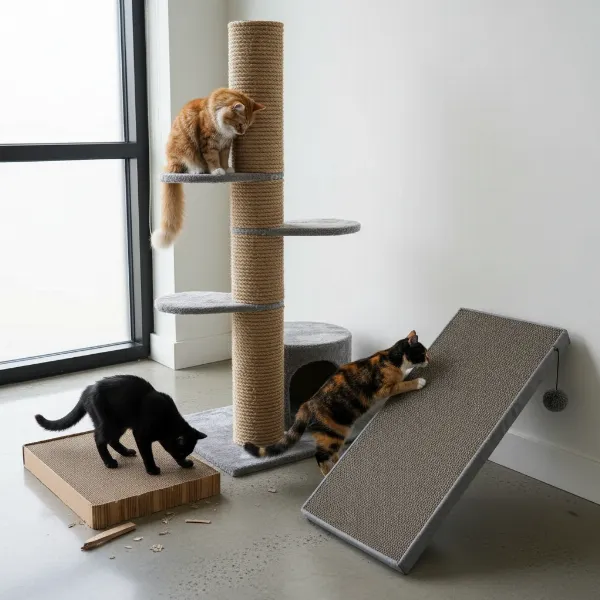 A selection of various cat scratching posts in different materials and orientations for feline appeal
Strategic Placement for Maximum Appeal
Even the perfect scratching post is useless if your cat doesn’t know it’s there or finds it inconvenient. Strategic placement is paramount. Place scratching posts in areas where your cat already likes to scratch, such as right next to the chair they currently target. This provides a “legal” alternative directly in their preferred scratching zone.
Cats often enjoy scratching after waking up, so placing a post near their sleeping area can be highly effective. High-traffic areas where your cat spends a lot of time are also excellent locations. The goal is to make the appropriate scratching surface readily available and more convenient than your furniture. As your cat consistently uses the new post, you can gradually move it to a more desired permanent location, if necessary.
Enticing Your Cat to Use Their Scratcher
Once you’ve set up the right scratching post in a prime location, you need to entice your cat to use it.
- Catnip: If your cat responds to catnip, sprinkle some on the new post or use a catnip spray to make it irresistible.
- Toys: Hang toys from vertical posts or use a feather wand to engage your cat in play around the scratcher. When their claws naturally catch the surface during play, they’ll discover its satisfying texture.
- Pheromone Sprays: Products like Feliway Classic contain synthetic feline facial pheromones that create a calming, familiar scent, often encouraging cats to rub and scratch in those areas. Applying it to the designated scratcher can make it more appealing.
- Positive Reinforcement: This is perhaps the most crucial element. Whenever you see your cat scratching their post (even if it’s just for a second), offer immediate praise, a favorite treat, or a short playtime session. This positive association will reinforce the desired behavior, teaching them that scratching the post leads to good things. Never punish your cat for scratching inappropriate objects, as this can create fear and anxiety, making the problem worse or causing them to scratch when you’re not around. Gently redirect them to the post instead.
Humane Deterrents to Protect Your Chairs
While creating an attractive alternative is essential, sometimes you also need to make your chairs less appealing. Humane deterrents aim to make scratching undesirable without causing harm or fear to your cat.
Physical Barriers and Covers
Physical barriers create an unpleasant or inaccessible surface for scratching.
- Double-sided Sticky Tape: Cats famously dislike sticky textures. Applying strips of double-sided tape (specifically designed for furniture protection, which is safe for fabrics) to the areas your cat scratches can be highly effective. They’ll quickly learn to avoid these sticky spots.
- Furniture Protectors: Transparent adhesive sheets or vinyl guards can be applied directly to upholstered furniture. These provide a smooth, scratch-resistant barrier while remaining discreet. Some innovative products even include corner protectors that drape over chair arms, offering protection while still allowing the cat to scratch on the protector if they choose.
- Temporary Covers: For short-term solutions, covering your chair with a tightly tucked sheet, a thick blanket, aluminum foil, or even plastic can deter scratching. These materials either don’t offer the satisfying resistance cats seek or create an unpleasant texture or sound.
Scent-Based Repellents
Many cats have a strong aversion to certain smells. You can leverage these natural dislikes to deter them from your chairs.
- Natural Scents: Citrus scents (lemon, orange, grapefruit), eucalyptus, lavender, and menthol are often disliked by cats. You can make a homemade spray by diluting a few drops of citrus essential oil (like lemon or orange) in water. Always test on an inconspicuous part of your furniture first to ensure it doesn’t stain and use essential oils cautiously, ensuring they are highly diluted and not sprayed directly on your cat or in an area they might lick. Apple cider vinegar is another common natural deterrent.
- Commercial Deterrent Sprays: Numerous pet-safe sprays are available that contain scents or compounds cats find unpleasant. Look for brands specifically formulated to deter scratching, like Pet MasterMind Claw Withdraw or Nature’s Miracle Advanced Platinum Cat Scratch Deterrent.
- Odor Neutralizers: If your cat has already marked your chair with scent pheromones from their paws, an enzymatic odor neutralizer can help eliminate these invisible attractants, making the spot less appealing for future scratching.
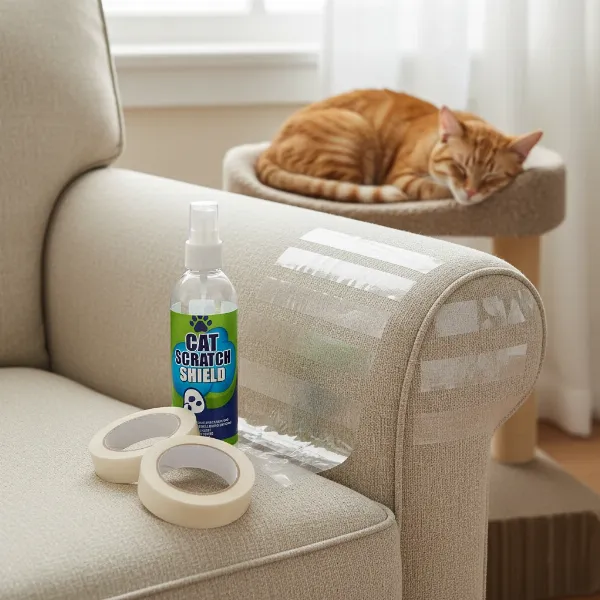 A bottle of cat repellent spray next to rolls of double-sided sticky tape on a protected furniture armrest
High-Tech Solutions and Other Methods
For persistent scratchers, a few additional tools can be considered:
- Motion-Activated Air Sprays: These devices release a burst of air when motion is detected, startling your cat away from the forbidden area without causing harm. They can be effective for interrupting the behavior.
- Regular Nail Trimming: Keeping your cat’s nails trimmed dulls their tips, reducing the damage they can inflict even if they do scratch. Consult your vet or a groomer if you’re unsure how to trim your cat’s nails safely.
- Soft Paw Caps: These are small, non-toxic vinyl caps that are glued onto your cat’s claws. They prevent damage if your cat scratches and typically last for four to six weeks before needing replacement. They offer a humane alternative to declawing.
Training and Consistency: The Key to Success
Implementing these strategies requires patience and, most importantly, consistency. Cats thrive on routine and clear boundaries.
- Gentle Redirection, Not Punishment: If you catch your cat scratching your chair, resist the urge to yell or use harsh methods. Instead, gently pick them up and place them directly onto their scratching post. Then, immediately praise and reward them if they engage with the post. This teaches them what is acceptable, rather than simply what is not.
- Be Consistent: All household members must be consistent in their approach. If one person allows scratching or doesn’t redirect, it can confuse your cat and undermine your efforts. Maintain deterrents on your chairs until your cat consistently uses their designated scratchers.
- Provide Mental and Physical Stimulation: A bored cat is a destructive cat. Ensure your feline friend has plenty of toys, daily interactive playtime, and opportunities for mental enrichment (e.g., puzzle feeders, cat trees for climbing). This can help reduce anxiety and excess energy that might otherwise be channeled into scratching.
“Redirecting a cat’s scratching is about understanding their needs and offering more compelling alternatives, rather than simply trying to stop a natural behavior.” – Dr. Sarah Miller, Feline Behaviorist
Choosing the Right Solutions: A Quick Overview
Finding the right combination of solutions often involves a bit of trial and error, as each cat is an individual with unique preferences.
Redirection Strategies (Pros/Cons):
- Pros: Addresses the root cause, promotes natural behavior, strengthens bond with positive reinforcement.
- Cons: Requires finding the “perfect” scratcher, takes patience and consistent training.
Deterrent Strategies (Pros/Cons):
- Pros: Offers immediate protection for furniture, can be highly effective in specific spots.
- Cons: Doesn’t address the underlying need to scratch, might just move the problem elsewhere if alternatives aren’t provided, some scents or barriers might be disliked by humans too.
The most successful approach often involves a blend of both: making your chairs undesirable while simultaneously making designated scratching posts extremely appealing.
Conclusion
Living with a cat doesn’t mean sacrificing your furniture. By understanding why your cat scratches and employing a combination of appealing alternatives and humane deterrents, you can effectively stop your cat from scratching your chairs. Remember, scratching is a vital instinct for cats, so the goal is always to redirect this behavior, not suppress it entirely. With patience, consistency, and a little creativity, you can ensure a harmonious home where both your cat’s natural needs and your furniture’s integrity are respected.
What methods have you found most effective in protecting your furniture from feline claws?
Frequently Asked Questions
Why does my cat suddenly start scratching furniture?
A sudden increase in furniture scratching can stem from several factors, including stress or anxiety (e.g., a new pet, moving, changes in routine), boredom due to lack of stimulation, or a need to re-mark territory if their previous scent marks have faded. Ensure they have appropriate scratching outlets and rule out any underlying health issues with a vet visit.
Are essential oil sprays safe for cats?
While some essential oils like citrus can deter cats, they can be toxic if ingested or absorbed through the skin, as cats lack certain liver enzymes to metabolize them. It’s best to use commercially prepared, pet-safe deterrent sprays or heavily dilute natural oils and ensure they are never sprayed directly on your cat or in areas where they might lick. Always test for fabric discoloration first.
How long does it take to stop a cat from scratching furniture?
The time it takes varies greatly depending on the cat’s age, personality, and the consistency of your training. Some cats may adapt in a few weeks, while others might take several months. Persistence with positive reinforcement, strategic placement of scratchers, and consistent use of deterrents are crucial for long-term success.