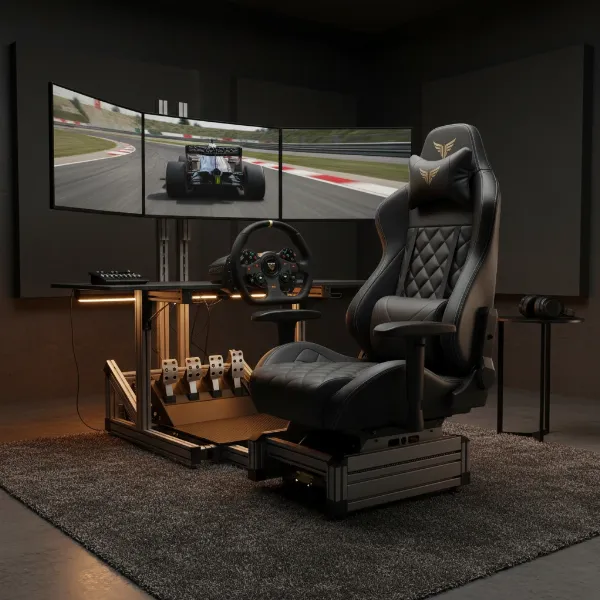
Are you ready to truly feel your games, not just see and hear them? For years, gamers have chased ever-increasing levels of immersion, from stunning graphics and crystal-clear audio to the revolutionary worlds of virtual reality. But what if the very chair you sit in could become an integral part of that experience, delivering tactile sensations that put you directly into the heart of the action? This isn’t science fiction; it’s the exciting reality of haptic feedback gaming chairs, poised to redefine how we interact with our digital worlds.
Overview of Gaming Chairs
Gaming chairs have come a long way from repurposed office chairs. Initially designed to offer enhanced comfort and support for prolonged gaming sessions, they quickly evolved into a dedicated category. Characterized by aggressive styling, robust frames, and ergonomic features like adjustable lumbar and neck pillows, these chairs aimed to combine performance aesthetics with crucial back health. The market now boasts various types, from racing-style chairs to more subtle ergonomic models, all striving to keep players comfortable and focused.
The Evolution of Gaming Immersion
The quest for gaming immersion has been a relentless journey. From pixelated landscapes to photorealistic worlds, visual fidelity has soared. Audio has moved from mono beeps to intricate 3D soundscapes, allowing players to pinpoint enemy footsteps or feel the rumble of a distant explosion. Virtual Reality (VR) pushed boundaries further, surrounding players in digital environments. Yet, one sense largely remained underserved in the core gaming setup: touch. Peripherals like vibration-enabled controllers offered glimpses of tactile feedback, but the full-body experience remained elusive until the advent of haptic technology in seating.
Haptic Feedback Technology Explained
At its core, haptic feedback refers to any technology that can create an experience of touch by applying forces, vibrations, or motions to the user. This tactile communication enhances interaction by engaging our sense of touch. In the context of gaming chairs, this typically involves advanced haptic transducers or “haptic engines” strategically embedded within the seat and backrest. These components convert audio signals or in-game telemetry data into physical vibrations and motions that players can feel in real-time. For example, a chair might vibrate intensely during an in-game explosion, gently hum to simulate an engine, or even tilt to mimic acceleration or terrain changes. Some systems, like the Razer Enki Pro HyperSense developed with D-BOX, even interact directly with a game’s physics engine for highly realistic and responsive sensations.
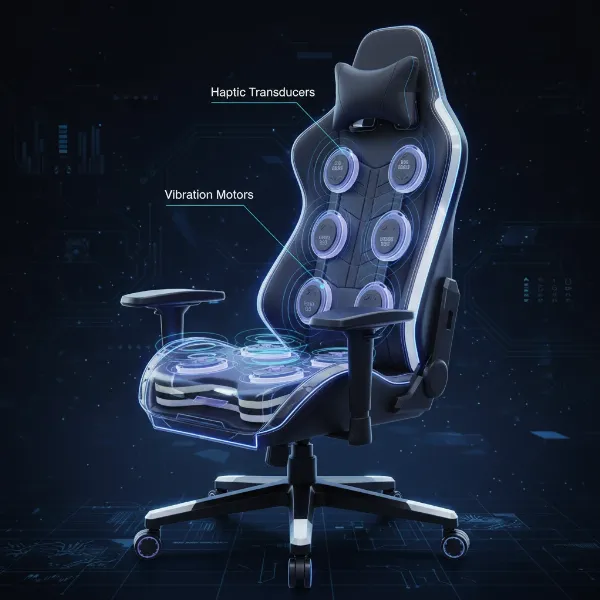 Diagram of a haptic gaming chair showcasing internal transducers and vibration technology for immersive tactile feedback.
The Promise of Haptic Feedback in Gaming Chairs
The integration of haptic feedback promises a new era of gaming immersion. Imagine feeling the recoil of every gunshot, the rumble of an off-road vehicle traversing rough terrain, or the subtle vibrations of a spaceship’s engines as you soar through the cosmos. This “fourth dimension” of tactile sensation dramatically enhances realism, bridging the gap between the virtual and physical worlds. Beyond pure immersion, haptic feedback can offer practical advantages, potentially improving reaction times and overall gameplay by providing instantaneous physical cues to in-game events. Furthermore, innovative applications extend to accessibility, offering a crucial sensory input for disabled gamers, particularly those with hearing impairments, by translating vital audio cues into tangible vibrations. Haptic chairs aren’t just for gaming; they elevate the experience of watching movies and listening to music, turning any audio-visual content into a full-body sensory event.
Challenges and Considerations for Haptic Gaming Chairs
Despite the exciting potential, the widespread adoption of haptic gaming chairs faces several hurdles.
- Cost: The advanced technology and specialized components often translate to a higher price point than traditional gaming chairs, making them a premium investment.
- Technological Sophistication: Creating truly nuanced and precise haptic sensations requires sophisticated engineering, from the transducers themselves to the software that translates in-game data into tactile feedback.
- Software Integration: For the most immersive experiences, games need to be specifically designed or “encoded” to send haptic signals. While some systems like D-BOX HaptiSync already support thousands of titles, universal plug-and-play functionality with highly detailed feedback for every game remains a challenge. For non-encoded content, chairs often rely on converting audio into vibrations, which can be less precise.
- Physical Limitations: Some current models may have limitations in motion, such as primarily offering forward and backward movement but not lateral tilt, which can affect the realism in specific scenarios like racing games.
- Mainstream Adoption: While companies like Razer and Cooler Master have showcased impressive prototypes and concept designs, widespread consumer availability and mainstream market penetration are still developing. Many current offerings are niche or require additional components that strap onto existing chairs.
Current and Future Developments
The landscape of haptic gaming chairs is evolving rapidly, with several notable players leading the charge. Cooler Master’s Synk X aims to provide “real-time tactile experiences” by converting low-latency sound waves into vibrations. Razer, a pioneer in gaming peripherals, has demonstrated the Enki Pro HyperSense, which offers over 65,000 haptic variations, capable of simulating diverse textures and motions with up to +/- 1 G-Force. This chair, developed in partnership with D-BOX, integrates with game physics engines for precise feedback across a vast library of titles. More recently, Razer has explored haptic cushions like Project Esther, designed to strap onto existing chairs, indicating a focus on making haptics more accessible. Companies like Kratos offer the 4D Throne, equipped with powerful tactile transducers in both the backrest and seat, translating audio signals into precise feedback for games, movies, and music.
“The goal is to blur the lines between virtual and reality, making the player feel every bump, shot, and engine roar as if they are truly there.” – [Industry Analyst], Gaming Chair Technologies Expert
These developments point towards a future where haptic feedback becomes a standard expectation, not a luxury. Integration with virtual reality (VR) and augmented reality (AR) environments is also a key area of focus, promising to create truly immersive, multi-sensory digital experiences.
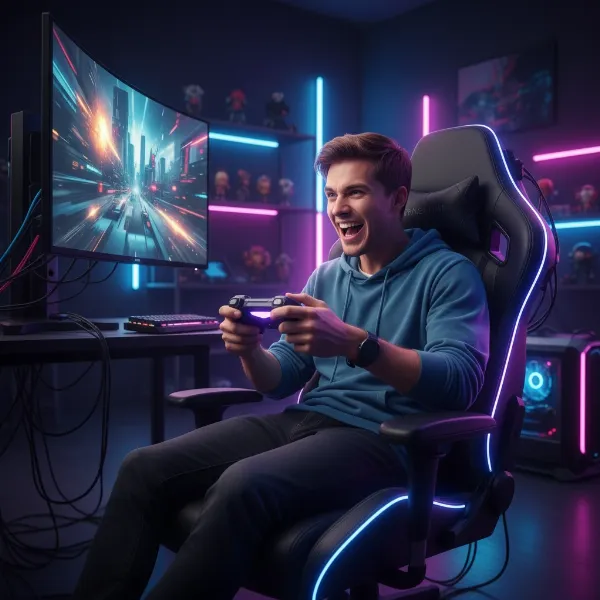 A gamer deeply immersed, feeling dynamic haptic feedback from a high-tech gaming chair during an intense game.
Choosing Your Future Gaming Chair: What to Look For
As haptic technology becomes more prevalent, selecting a gaming chair will involve a new set of considerations, alongside the traditional ones.
- Haptic Fidelity: Look for chairs that offer a wide range of haptic sensations, from subtle vibrations to powerful force feedback. Consider the precision and responsiveness of the feedback – does it truly sync with in-game actions, or is it merely a generic rumble?
- Software Integration: Check for compatibility with your favorite games and platforms. Chairs with native game support or a broad library of encoded content will offer a superior experience. Features like customizable settings for haptic intensity are also valuable.
- Ergonomics and Comfort: Do not compromise on the fundamental purpose of a gaming chair: comfort and ergonomic support. Even with advanced haptics, a chair must provide excellent posture support, adjustable features, and quality materials for long gaming sessions.
- Versatility: Consider if the haptic capabilities extend beyond gaming to enhance other entertainment, such as movies or music.
- Build Quality and Durability: Haptic components add complexity, so ensure the chair is constructed from high-quality materials to withstand regular use and the demands of its integrated technology.
Conclusion
The evolution of gaming has consistently pushed the boundaries of immersion, and haptic feedback in gaming chairs represents the next significant leap. By integrating the sense of touch, these innovative chairs transform passive viewing into an active, full-body experience, enhancing realism, accessibility, and overall enjoyment. While challenges in cost and universal software integration remain, the rapid pace of development suggests that haptic feedback will soon become an indispensable feature for serious gamers and entertainment enthusiasts alike. The future of gaming chairs isn’t just about sitting comfortably; it’s about feeling every moment. Are you ready to embrace this new dimension of immersive play?
Frequently Asked Questions
Will all gaming chairs have haptic feedback in the future?
|
Our Picks for the Best Gaming Chair in 2026
As an Amazon Associate I earn from qualifying purchases.
|
||
| Num | Product | Action |
|---|---|---|
| 1 | Gaming Chair, 400 lbs Adult Chair, High Back Computer Chair with Footrest and Linked Armrests, Office Video Game Chair with Lumbar Support (Grey) |

|
| 2 | GTPLAYER Gaming Chair,Office Chair with Pocket Spring Lumbar Support, Ergonomic Comfortable Wide Office Desk Computer Chair with Outward Fixed Soft Armrests and Footrest (PU Leather, Black) |
|
| 3 | Razer Iskur V2 X Ergonomic Gaming Chair: Built-in Lumbar Support - Widened Seat Base - High Density Foam Cushions - Adjustable 152 Degree Recline - 2D Armrests - Plush Fabric Finish - Black |
|
| 4 | TRALT Office Chair Ergonomic Desk Chair, 330 LBS Home Mesh Office Desk Chairs with Wheels, Comfortable Gaming Chair, High Back Office Chair for Long Hours (White) |
|
| 5 | Ergonomic Office Chair with Footrest - Adjustable Lumbar Support & Headrest, 90-160° Reclining Mesh Back Computer Chair - Home Office/Gaming, 350lbs Capacity (SGS Certified) |
|
| 6 | Breathable Fabric Gaming Chair with Footrest, Height Adjustable Game Chair, Video Gaming Chair for Gaming Room, Living Room and Office - Blue/Light Grey |
|
| 7 | Gaming Chair with Linkage Armrest & Footrest, High Back Video Gaming Chair, Black/White |
|
| 8 | Sweetcrispy Computer Gaming Desk Chair - Ergonomic PU Leather with Comfy Lumbar Support, Height Adjustable Rolling Desk with Flip-up Armrests, for Home and Office |
|
| 9 | BestOffice High-Back Gaming Chair PC Office Chair Computer Racing Chair PU Desk Task Chair Ergonomic Executive Swivel Rolling Chair with Lumbar Support for Back Pain Women, Men,White |
|
| 10 | BestOffice Gaming Chair Office Chair Ergonomic Desk Chair Racing Style Gaming Chair with Lumbar Support, Swivel Rolling Base, and Comfortable Padded Seat for Women and Men |
|
While it’s unlikely every entry-level chair will feature haptics, the technology is becoming more accessible. As costs decrease and integration improves, haptic feedback is expected to become a more common feature, especially in mid-range to high-end gaming chairs, driven by consumer demand for deeper immersion.
How does haptic feedback in a chair work?
Haptic gaming chairs use embedded transducers or haptic engines that convert audio signals or in-game data into physical vibrations and motions. This allows you to feel sensations like explosions, engine rumblings, or environmental effects directly through the chair, creating a tactile layer to your gaming experience.
What games would benefit most from haptic gaming chairs?
Games that feature intense action, environmental effects, or vehicle simulation benefit greatly. Racing games, flight simulators, first-person shooters, and open-world adventures with dynamic environments can all be dramatically enhanced by feeling impacts, terrain changes, or the roar of an engine.
Are haptic gaming chairs comfortable for long sessions?
Yes, most haptic gaming chairs are designed with ergonomics and comfort as primary considerations, alongside their technological features. They often include adjustable lumbar support, memory foam cushioning, and robust designs to ensure users remain comfortable even during extended gaming marathons.
What is the expected price range for future haptic gaming chairs?
Currently, haptic Gaming Chairs typically fall into the premium price segment due to their advanced technology. As technology matures and mass production scales, prices are expected to become more competitive, potentially moving from high-end luxury items to more accessible mid-range options over time.